There's hope for dogs who walk in pain!


Features
How Does the TATE™ Elbow Replacement System Work?
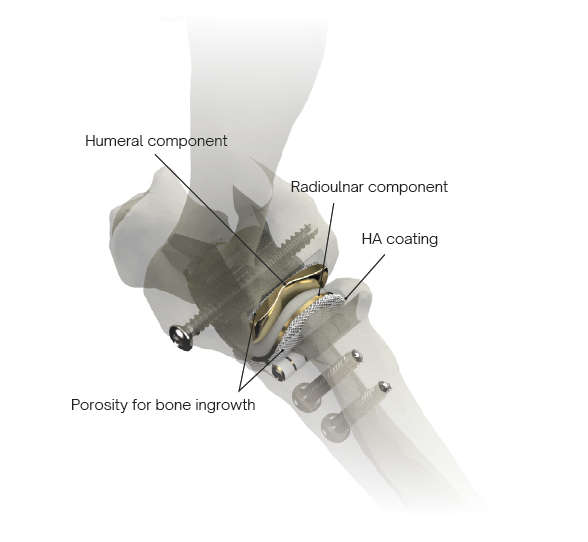
Features
How Does the KYON™ Medial Elbow Replacement System Work?
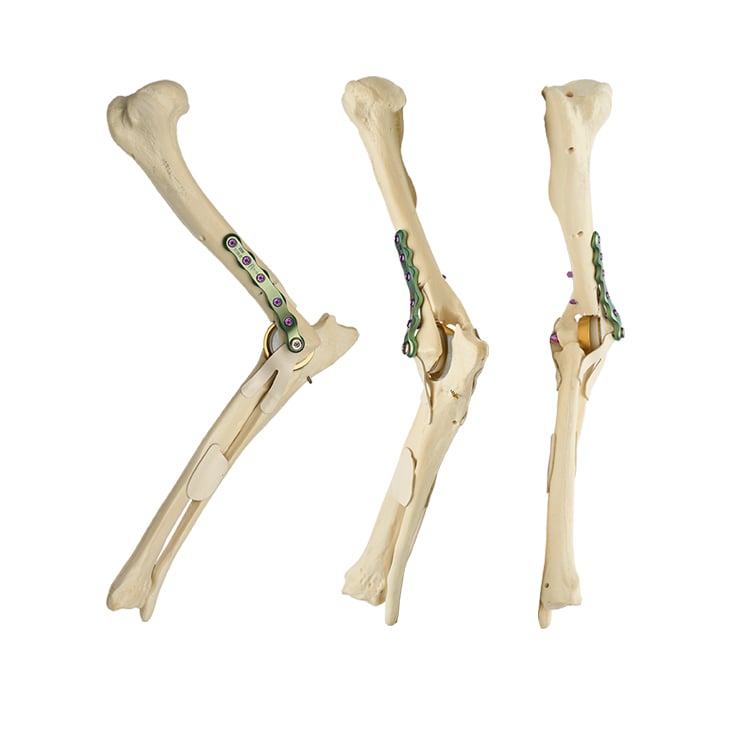
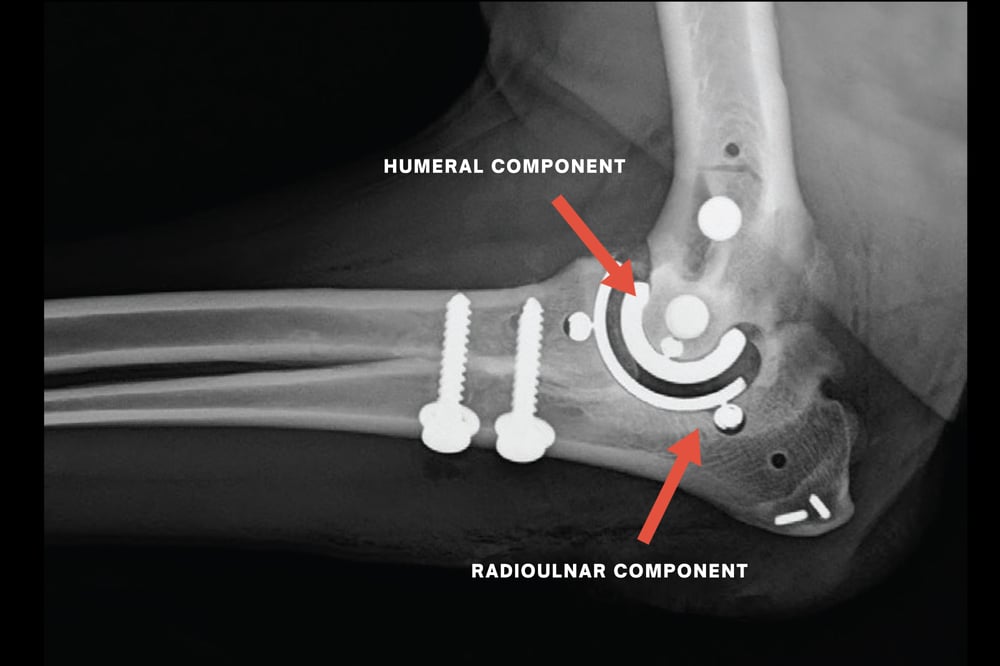
TATE™ Elbow Replacement System
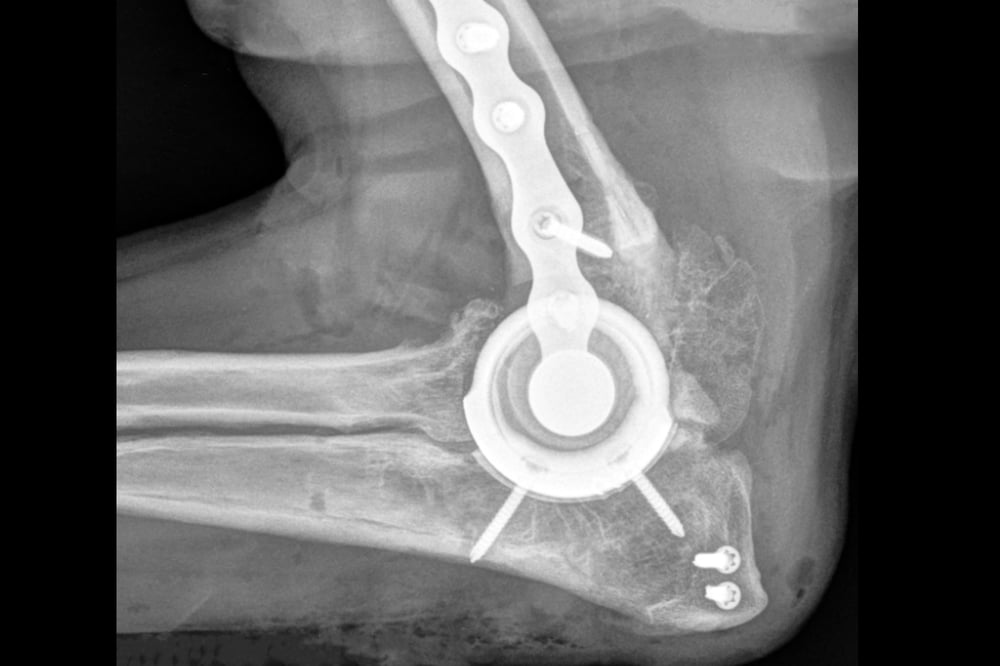
KYON™ Medial Elbow Replacement System
Know the Risks
Any surgery involves risk, and you should discuss these considerations with your veterinarian.
- Anesthesia and Infection Risks
- While rare, complications from anesthesia exist as a potential risk. Careful monitoring and experienced professionals mitigate these concerns.
- Surgical Site Infections, though infrequent, remain a consideration. Vigilant hygiene practices and meticulous postoperative care contribute to safeguarding against this risk.

- Additional Risks and Considerations:
- Potential of ulna or humerus (foreleg bones) fracture. While rare, it’s important to consider the surgical team’s expertise and the pet’s ability to follow postoperative instructions.
- For dogs carrying excess weight, proactive weight reduction prior to surgery contributes to surgical outcomes and supports postoperative recovery.
- Pressing health matters, such as cancer or other significant medical issues, call for prioritized treatment. Elbow replacement is most effective when not overshadowed by other concerns.
- Lameness from sources other than elbow pain, such as neck, shoulder, carpus, or metacarpals, will not be addressed by elbow replacement; your veterinarian will recommend treatment that fits your pet.

Mobility for All
The Movora family of brands is continually innovating to bring cutting-edge medicine to pets worldwide. The BioMedtrix TATE™ Ankle Replacement System & the KYON Medial Elbow System are two of the prestigious solutions we offer veterinary surgeons for restoring mobility and letting pets enjoy life with their families.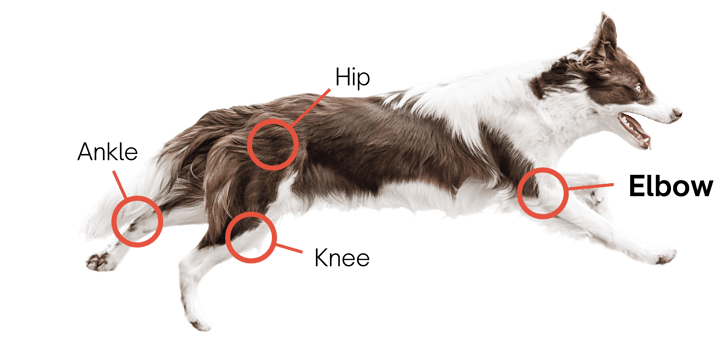

Movora offers veterinarians worldwide orthopedic and surgical products, education opportunities and service centers. We’ve been pioneering innovation to deliver patient success stories for more than 30 years.
This material is for educational purposes only. It does not replace the diagnosis or advice of your veterinarian. For more information please contact your veterinary specialist.